


Flash permits fast detection of points originating from the Azure platform, serving to groups reply shortly to infrastructure-related disruptions.
Beforehand, we shared an replace on Challenge Flash as a part of our Advancing Reliability weblog sequence, reaffirming our dedication to serving to Azure clients detect and diagnose digital machine (VM) availability points with velocity and precision. This 12 months, we’re excited to unveil the newest improvements that take VM availability monitoring to the subsequent degree—enabling clients to function their workloads on Azure with even better confidence. I’ve requested Yingqi (Halley) Ding, Technical Program Supervisor from the Azure Core Compute group, to stroll us by way of the most recent investments powering the subsequent section of Challenge Flash.
— Mark Russinovich, CTO, Deputy CISO, and Technical Fellow, Microsoft Azure.
Challenge Flash is a cross-division initiative at Microsoft. Its imaginative and prescient is to ship exact telemetry, real-time alerts, and scalable monitoring—all inside a unified, user-friendly expertise designed to fulfill the various observability wants of digital machine (VM) availability.
Flash addresses each platform-level and user-level challenges. It permits fast detection of points originating from the Azure platform, serving to groups reply shortly to infrastructure-related disruptions. On the similar time, it equips you with actionable insights to diagnose and resolve issues inside your individual setting. This twin functionality helps excessive availability and helps guarantee your enterprise Service-Stage Agreements are constantly met. It’s our mission to make sure you can:
- Achieve clear visibility into disruptions, similar to VM reboots and restarts, utility freezes as a result of community driver updates, and 30-second host OS updates—with detailed insights into what occurred, why it occurred, and whether or not it was deliberate or sudden.
- Analyze tendencies and set alerts to hurry up debugging and monitor availability over time.
- Monitor at scale and construct customized dashboards to remain on prime of the well being of all assets.
- Obtain automated root trigger analyses (RCAs) that specify which VMs had been affected, what precipitated the difficulty, how lengthy it lasted, and what was performed to repair it.
- Obtain real-time notifications for crucial occasions, similar to degraded nodes requiring VM redeployment, platform-initiated service therapeutic, or in-place reboots triggered by {hardware} points—empowering your groups to reply swiftly and decrease person influence.
- Adapt restoration insurance policies dynamically to fulfill altering workload wants and enterprise priorities.
Throughout our group’s journey with Flash, it has garnered widespread adoption from a few of the world’s main corporations spanning from e-commerce, gaming, finance, hedge funds, and lots of different sectors. Their in depth utilization of Flash underscores its effectiveness and worth in assembly the various wants of high-profile organizations.
At BlackRock, VM reliability is crucial to our operations. If a VM is working on degraded {hardware}, we wish to be alerted shortly so we’ve the utmost alternative to mitigate the difficulty earlier than it impacts customers. With Challenge Flash, we obtain a useful resource well being occasion built-in into our alerting processes the second an underlying node in Azure infrastructure is marked unallocatable, usually as a result of well being degradation. Our infrastructure group then schedules a migration of the affected useful resource to wholesome {hardware} at an optimum time. This means to predictively keep away from abrupt VM failures has lowered our VM interruption fee and improved the general reliability of our funding platform.
— Eli Hamburger, Head of Infrastructure Internet hosting, BlackRock.
Suite of options accessible in the present day
The Flash initiative has developed into a sturdy, scalable monitoring framework designed to fulfill the various wants of contemporary infrastructure—whether or not you’re managing a handful of VMs or working at large scale. Constructed with reliability at its core, Flash empowers you to observe what issues most, utilizing the instruments and telemetry that align along with your structure and operational mannequin.
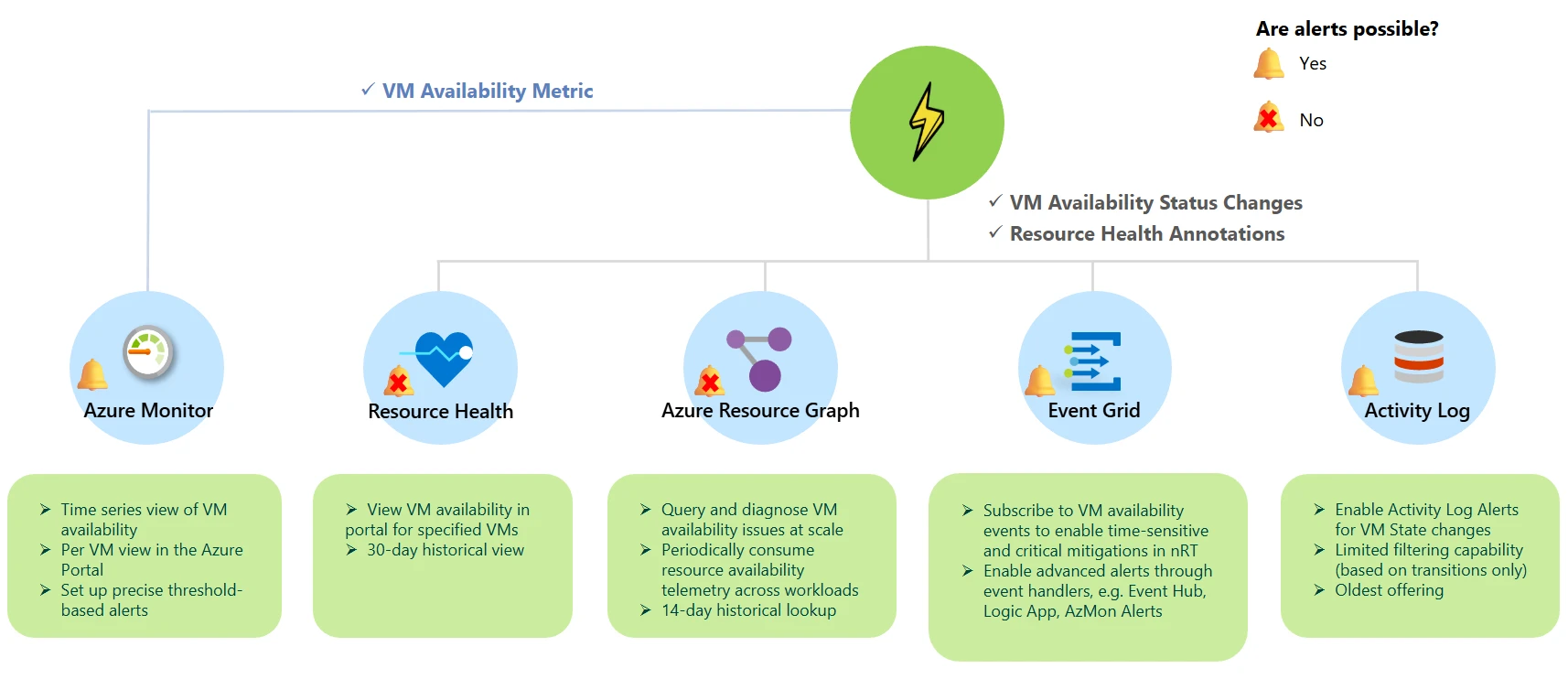
Flash publishes VM availability states and useful resource well being annotations for detailed failure attribution and downtime evaluation. The information under outlines your choices so you’ll be able to select the proper Flash monitoring resolution in your situation.
| Resolution | Description |
| Azure Useful resource Graph (basic availability) | For investigations at scale, centralized useful resource repositories, and historic lookups, you’ll be able to periodically eat useful resource availability telemetry throughout all workloads directly utilizing Azure Useful resource Graph (ARG). |
| Occasion Grid system matter (public preview) | To set off time-sensitive and important mitigations, similar to redeploying or restarting VMs to stop end-user influence, you’ll be able to obtain alerts inside seconds of crucial adjustments in useful resource availability through Occasion Handlers in Occasion Grid. |
| Azure Monitor – Metrics (public preview) | To trace tendencies, combination platform metrics (e.g., CPU, disk), and configure exact threshold-based alerts, you’ll be able to eat an out-of-the-box VM availability metric through Azure Monitor. |
| Useful resource Well being (basic availability) | To carry out instantaneous and handy per-resource well being checks within the Portal UI, you’ll be able to shortly view the RHC blade. It’s also possible to entry a 30-day historic view of well being checks for that useful resource to help quick and efficient troubleshooting. |
What’s new?
Public preview: Person vs platform dimension launched for VM availability metric
Many shoppers have emphasised the necessity for user-friendly monitoring options that present real-time, scalable entry to compute useful resource availability information. This data is important for triggering well timed mitigation actions in response to availability adjustments.
Designed to fulfill this crucial want, the VM availability metric is well-suited for monitoring tendencies, aggregating platform metrics (similar to CPU and disk utilization), and configuring exact threshold-based alerts. You’ll be able to make the most of this out-of-the-box VM availability metric in Azure Monitor.
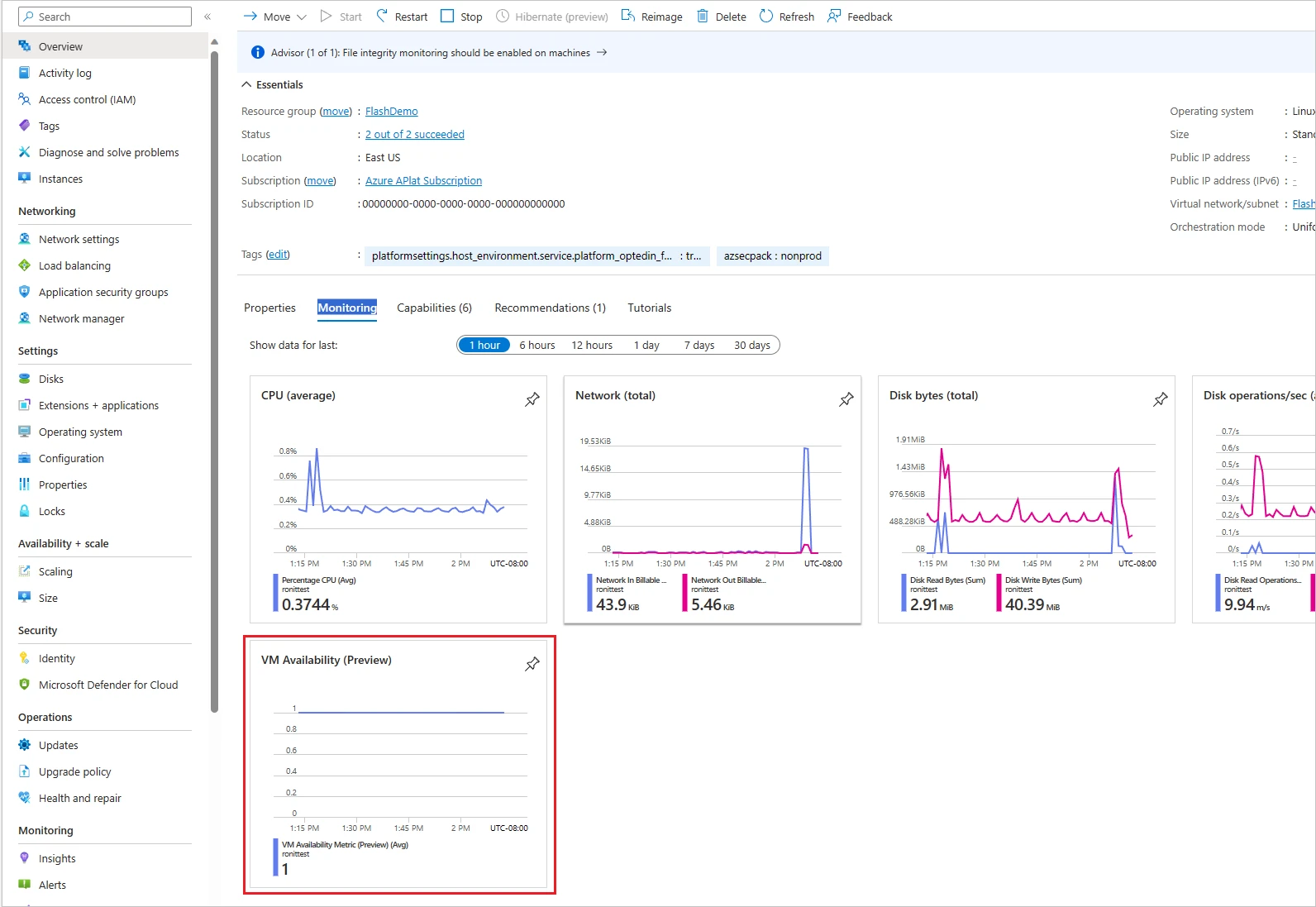
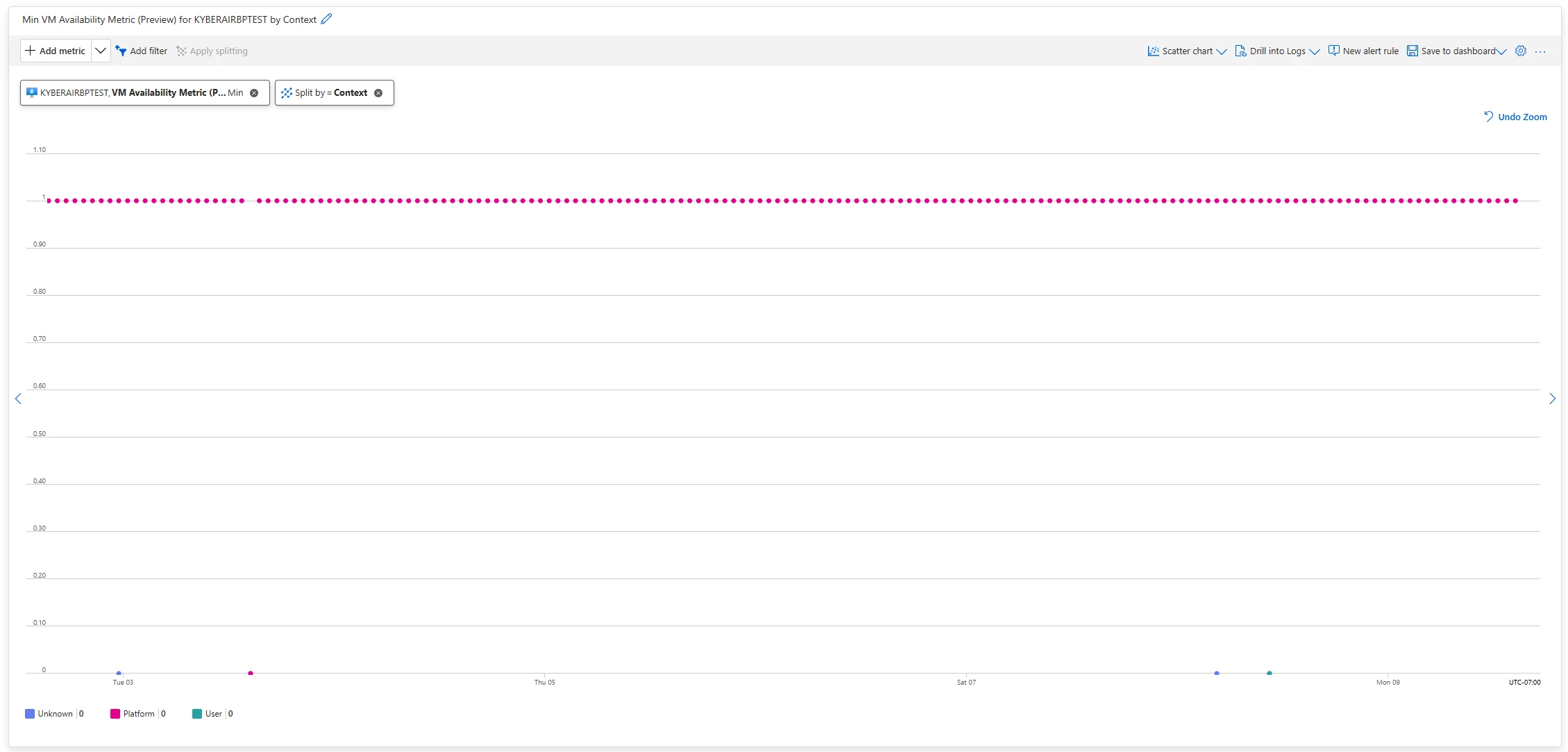
Now you should utilize the Context dimension to establish whether or not VM availability was influenced by Azure or user-orchestrated exercise. This dimension signifies, throughout any disruption or when the metric drops to zero, whether or not the trigger was platform-triggered or user-driven. It might assume values of Platform, Buyer, or Unknown.
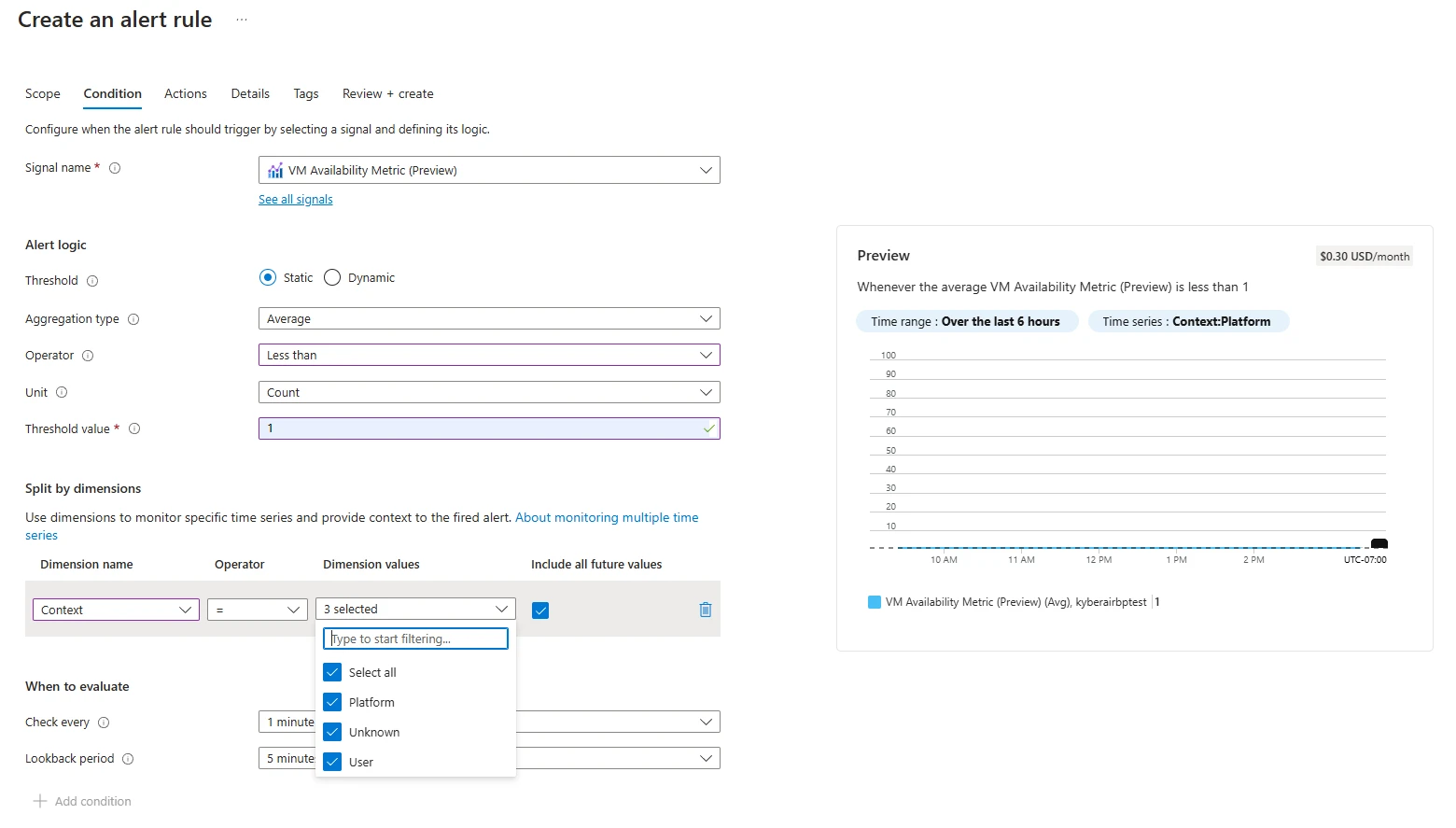
The brand new dimension can be supported in Azure Monitor alert guidelines as a part of the filtering course of.
Public preview: Allow sending well being assets occasions to Azure Monitor alerts in Occasion Grid
Azure Occasion Grid is a extremely scalable, totally managed Pub/Sub message distribution service that gives versatile message consumption patterns. Occasion Grid allows you to publish and subscribe to messages to help Web of Issues (IoT) options. By HTTP, Occasion Grid allows you to construct event-driven options, the place a writer service (similar to Challenge Flash) broadcasts its system state adjustments (occasions) to subscriber functions.
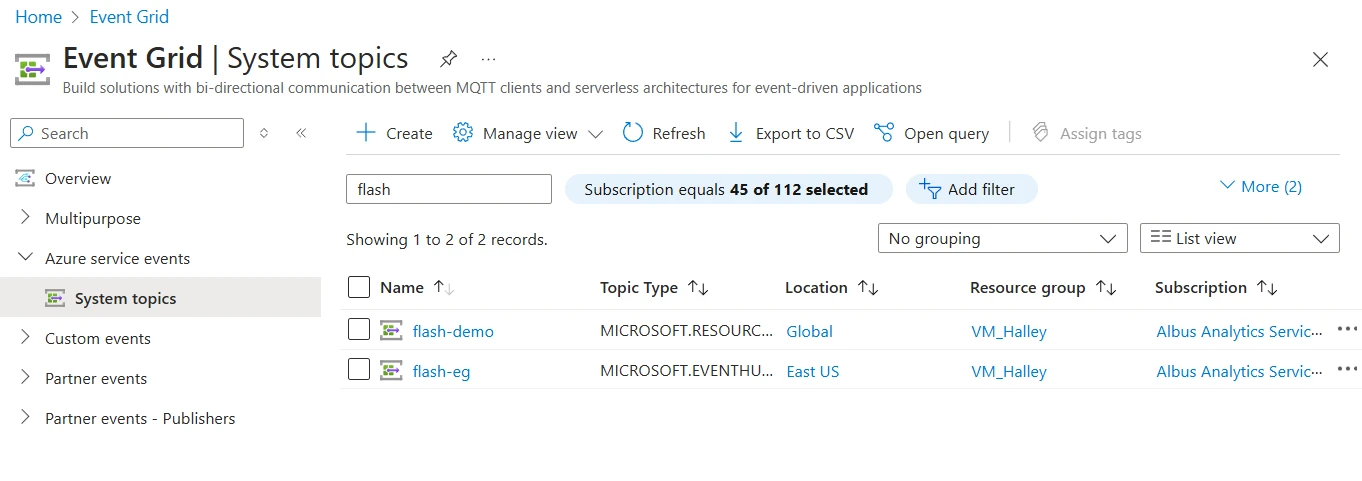
With the mixing of Azure Monitor alerts as a brand new occasion handler, now you can obtain low-latency notifications—similar to VM availability adjustments and detailed annotations—through SMS, e mail, push notifications, and extra. This combines Occasion Grid’s close to real-time supply with Azure Monitor’s direct alerting capabilities.
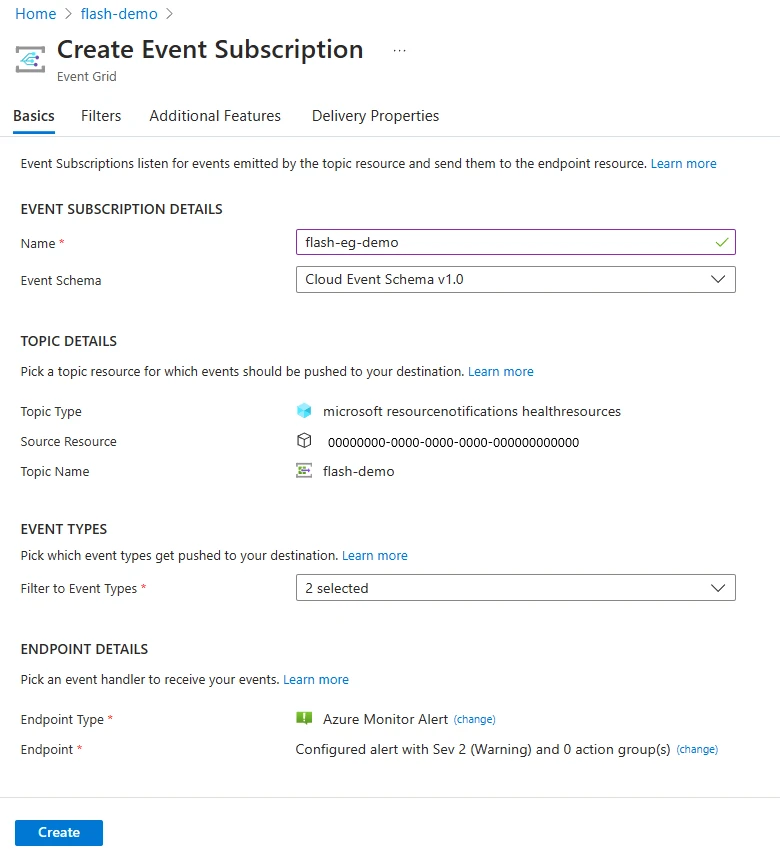
To get began, merely observe the step-by-step directions and start receiving real-time alerts with Flash’s new providing.
What’s subsequent?
Trying forward, we plan to broaden our focus to incorporate situations similar to inoperable top-of-rack switches, failures in accelerated networking, and new lessons of {hardware} failure prediction. As well as, we intention to proceed enhancing information high quality and consistency throughout all Flash endpoints—enabling extra correct downtime attribution and deeper visibility into VM availability.
For complete monitoring of VM availability—together with situations similar to routine upkeep, reside migration, service therapeutic, and degradation—we suggest leveraging each Flash Well being occasions and Scheduled Occasions (SE).
- Flash Well being occasions supply real-time insights into ongoing and historic availability disruptions, together with VM degradation. This facilitates efficient downtime administration, helps automated mitigation methods, and enhances root trigger evaluation.
- Scheduled Occasions, in distinction, present as much as quarter-hour of advance discover previous to deliberate upkeep, enabling proactive decision-making and preparation. Throughout this window, you could select to acknowledge the occasion or defer actions primarily based in your operational readiness.
For upcoming updates on the Flash initiative, we encourage you to observe the advancing reliability sequence!